Sauna vs Steam Room:
The Real Difference
Which One Are You Actually Looking For?
People use "sauna" and "steam room" like they're the same thing. They are not the same thing. One is a dry 90°C wood-lined room. The other is a warm fog at 45°C you can barely see across. Both are excellent. They're just built for different jobs.
Here's the actual difference — and which one you're probably looking for today.
The short answer
Sauna: dry heat, 80–95°C, low humidity. Wood benches, hot stones, the occasional hiss of water hitting rock.
Steam room: wet heat, 40–50°C, 100% humidity. Tile, fog, condensation on every surface.
Both make you sweat. They get there differently, and they're good at different things.
What dry heat does
In a proper Finnish sauna, the 85–95°C air pushes your body into deep vasodilation — blood vessels widen, circulation surges, and your heart works like you're on a brisk walk while you sit perfectly still. That heat load triggers heat-shock proteins, the cellular repair crew associated with stress resilience and recovery.
Because the air is dry, your sweat evaporates. That's why you can sit in 90°C and feel challenged rather than overwhelmed.
What wet heat does
A steam room runs cooler by necessity: at 100% humidity your sweat has nowhere to go, so heat builds on the skin fast. Cooler air, same sweat.
That humidity is the point, not a compromise. Warm, saturated air is genuinely good for airways and sinuses, which is why steam has always been the congestion-season favourite. It's gentler on the skin, it doesn't dry you out, and the lower temperature makes it far more accessible if high heat is uncomfortable for you — or if you're easing in for the first time. Plenty of people who can't sit in 90°C are perfectly happy at 45°C, and they're getting a real session, not a lesser one.
Which one should you pick?
If you're after deep cardiovascular load, the heat-shock adaptation, and the full hot-cold reset — that's the sauna. Dry heat pairs with cold plunging the way espresso pairs with morning: the contrast between 90°C and 5°C is where the sharpest physiological shift happens.
If you're after easier heat, clearer sinuses, and something you can sit in for a long, unhurried stretch — steam is the better tool. Different goal, different room.
New here? The sauna etiquette guide covers the unwritten rules either way.
The Hong Kong wrinkle
Hong Kong has plenty of good steam — the traditional bathhouses in particular do it properly, and have for decades. What's harder to find is a Finnish sauna run at genuine temperature, big enough to bring people with you, with cold water right outside the door.
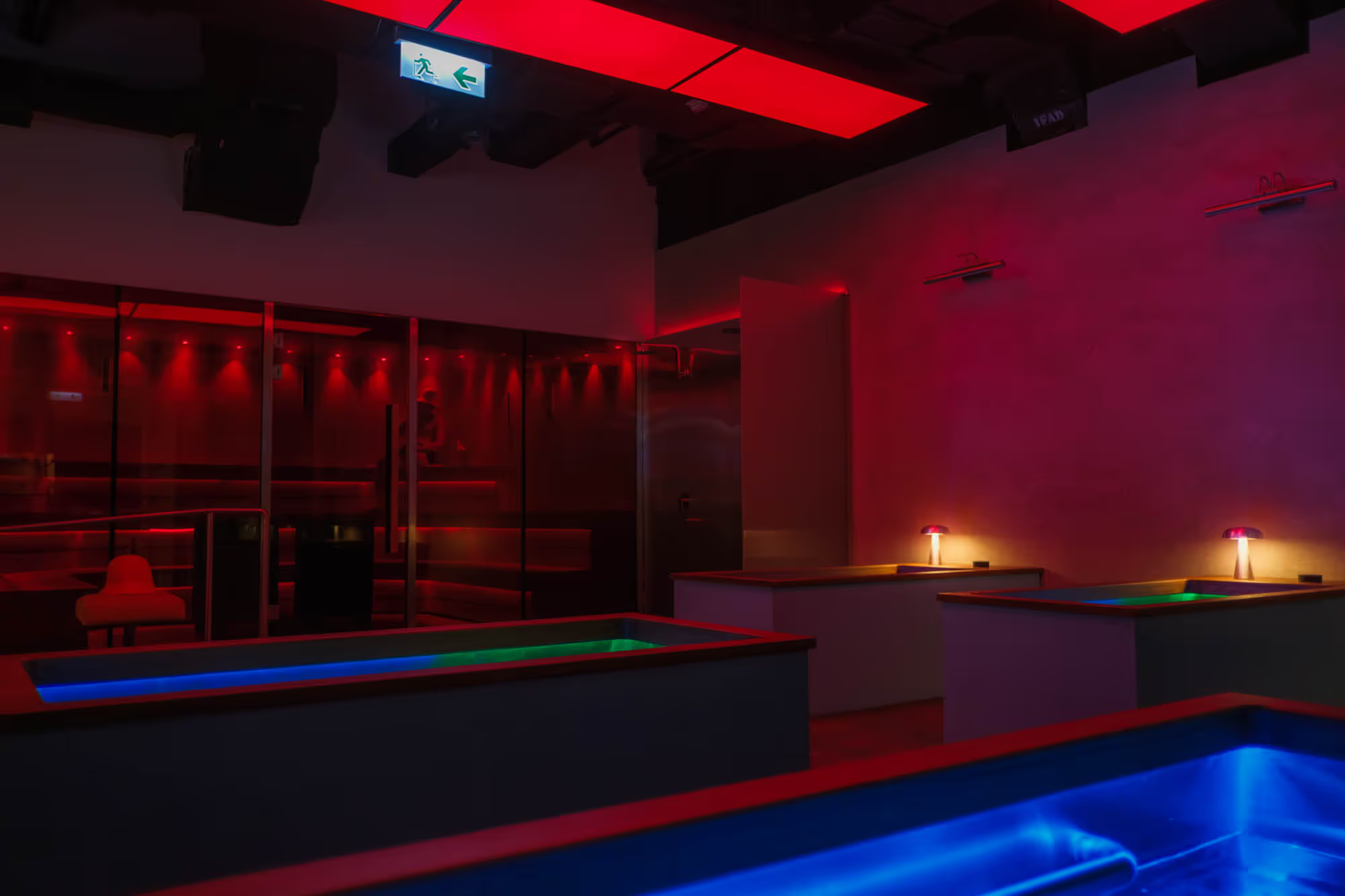
That's the gap we built to fill: Central's flagship Finnish sauna at 85–95°C, room for 30, five ice-cold plunges a few steps away.
We chose dry heat and cold water. If steam is what your body wants today, go get steam — just get it somewhere that takes it seriously.
Where: 2/F, 11 Stanley Street, Central, Hong Kong
Hours: Mon–Fri 7am–10pm · Sat–Sun 9am–10pm
First time? The Ice Breaker Trial — $499 for 7 days of unlimited dips.
Questions?
Is a sauna or steam room better?
Why is a steam room cooler than a sauna?
Do you have a steam room?
Which is better for recovery?